Genre : 2D-Platformer
Development Tools : Unity, PlasticSCM, Asperite
Team Size : 4 Members
Role: Game Designer, UI/UX, Sprite Artist
Development Time : ~ 2 months
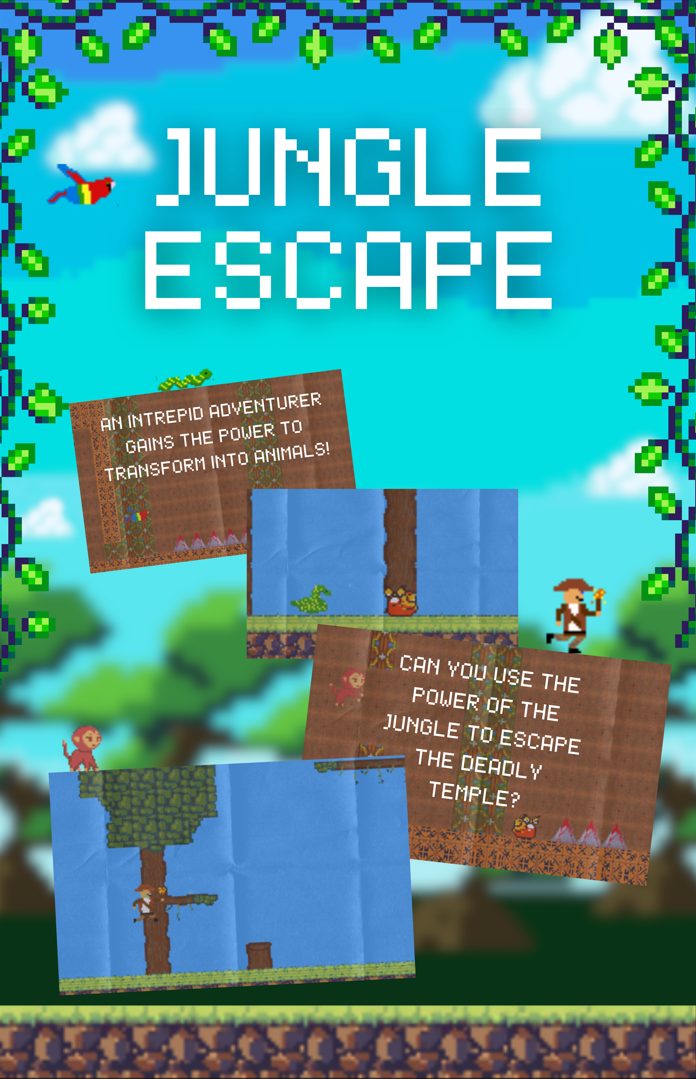
In Jungle Escape, players will use the power of polymorphism in order to navigate the dangers of the wild and reach safety. Alternate between the adventurer, monkey, snake and bird forms in order to adapt to any situation.
Itch.io: https://matchagatcha.itch.io/jungle-jam
Narrative
Game Design Document
When coming up with the idea for Jungle Escape, we felt that the lush wildlife of the jungle biome could easily lend itself to a vibrant array of enemies and obstacles, which became the main inspiration behind everything
The story synopsis is as follows:
A budding archeologist travels to a fabled jungle rumored to be the resting place of an ancient civilization of druids. After days of searching, he uncover the very crown jewel they were looking for: the overgrown remnants of a temple.
Eventually, as he enters the temple, he notices signs of human life. Despite the structure being decrepit and old, there are signs of fresh prints, and various doors are smashed in. With various rooms being ransacked and ruined, it is clear some pillagers have also found this place.
Determined to confront them and preserve the temple, he marches onwards until he stumbles into a secret room. A pristine glittering emerald embedded in a bracelet of leaves floats in the center of this dark, cold room. Knowing he must hide an obviously valuable artifact, he goes to pick it up, where it latches onto him, glowing brightly before he shapeshifts through various animal forms.
Alongside this development, the temple rumbles, and seemingly whirs into life. Now, our archeologist is task with escaping this temple, and from the pillagers in order to save the last remaining relic of the ancient druids!
Design Process
Form Balancing
When it came to Jungle Escape, the vision was to have dynamic movement, achieved by swapping forms into the various animals. So each level was meant to accommodate for the various strengths and weaknesses of the forms, and adhered to that philosophy to achieve a fluid game.
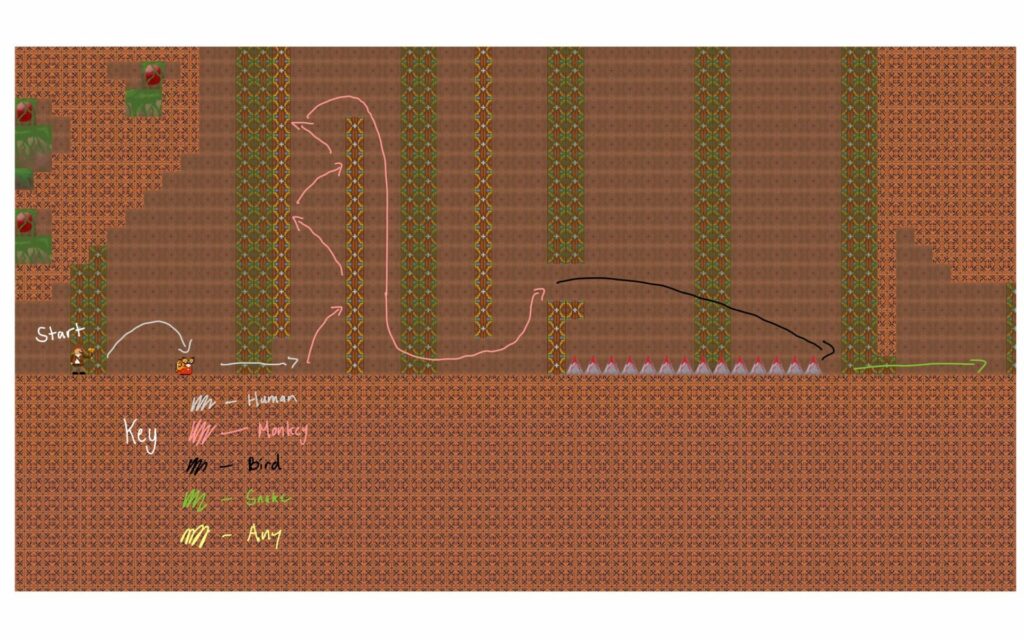
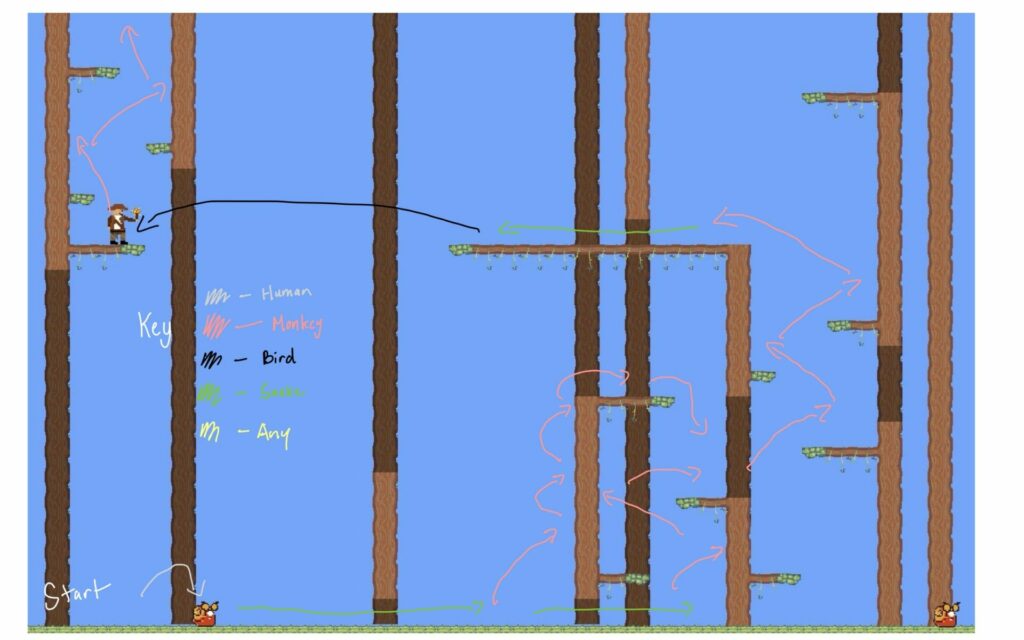
Creating the levels, I took into mind what each form offered. The human can kill snail enemies via stomping, the monkey can wall climb and double jump, the bird can glide, and the snake can fit into small spaces.
However, this ideal ran into more issues when it became evident that the monkey form was clearly superior to every other form. It had both wall jump and double jump, but the deal-breaking part was how momentum was calculated in our game. By double-jumping instantly, the force of the jumps would combine and essentially launch the monkey anywhere they want.
I didn’t want players to only utilize the monkey form so I made sure to include stretches of platforming where each form’s individual strength would be shown. In order to do so, there are sections in levels certain obstacles were added specifically for the monkey. However, to avoid restricting players too much, since they should be able to have fun with swapping forms, some areas accommodate multiple solutions for various forms.
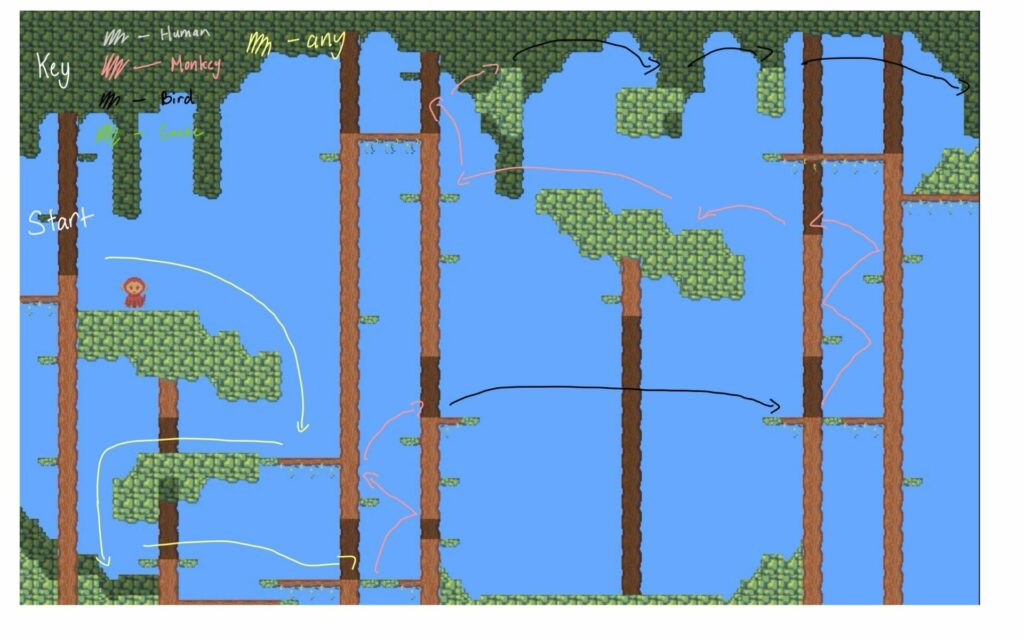
Intended Paths
Level Layouts
When it came to the complexity of the levels, I wanted to create a clear distinct feeling between the temple and the jungle, the two zones we implemented in time. Since the jungle is known for its’ thick density of vegetation, I wanted to avoid jungle levels only using linear progression, moving from left to right, in order to add to that feel of being more wild.
Thus, the temple levels are more linear in comparison, offering itself as a simple intro to the mechanics by using the more traditional left to right progression. In the jungle, players will have use more navigational skills to escape, but still being guided by the obstacles to nudge them in the correct direction.
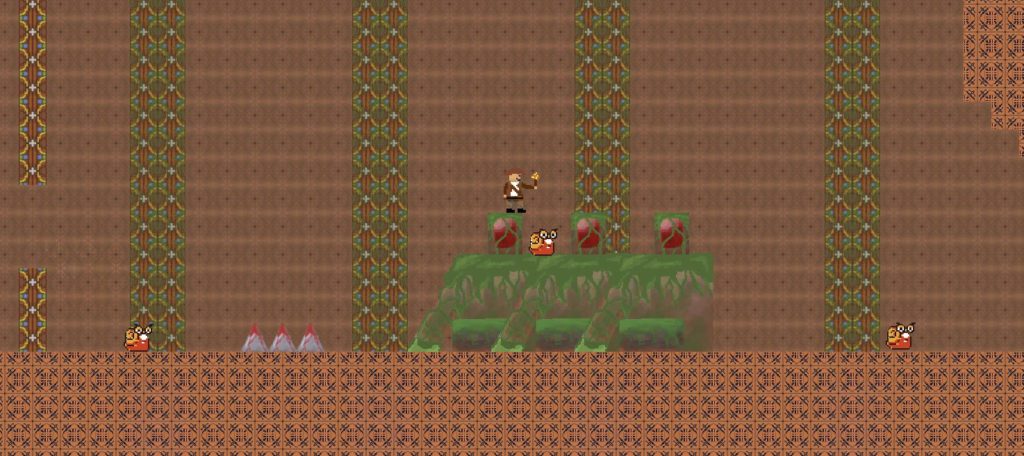
On the right, we can see a comparison of the first level compared to the last. The first level is beatable with only the human form, and doesn’t require any particular pathing aside from avoiding/battling the snails. On the other hand, the final level does require switching, and even has some parts where the player could fall back or loop around.
Simple to Complex
Scrapped Ideas
Initially we had more complex mechanics that we wanted to incorporate, but we had to scrap due to time restraints to keep the scale of the project more reasonable for our student group. Most of these below are listed in the GDD above but here I will go further into the thought process and design philosophy behind some ideas that we really wanted to have.
Snake Form
As of release, our snake form is simply meant to go into 1 block spaces that no other form can enter. However, in pre-development, we had a much more grand vision of the form. The idea of the form was to use the imagery of the snake’s cunning nature via access to hidden areas. Originally, we were going to have the background be much more populated, and at certain access points, the snake would be able to slither to the background and navigate through it’s own unique level with a top-down view. Additionally, in order to display the snake’s “slippery” and graceful movements, we were going to have the snake be uniquely immune to spikes and other traps.
Obstacles and Enemies
Snails ended up being our only enemy in our build, serving as a Goomba that players can stomp with the human form. Some scrapped enemies included: poisonous frogs that would leap and stretch their tongue out to attack, wasps that flew around and shot stingers, carnivorous plants that would bite at the player. Moving on from wildlife, we also wanted to include the bandits/pillagers, human enemies that could potentially chase or shoot at the player, but this was scrapped early. Traps are also missing from our final build, these would mostly be seen in the temple alongside the spikes, and pressure plates would trigger various attacks such as darts shooting, spears erupting, boulders falling, and so on.
Aquatic Form
This idea was scrapped very early on in the process, hence why its not even in the GDD. But we wanted a fish form or something similar so we could design water levels that would take place in the rivers of the jungle. Obstacles would include formerly mentioned piranhas, barracudas and strong currents.